The Word Among Us Mass Edition
- 4.3
- Rating
- 100.00K
- Installs
- Free
- Price

 Analysis by App-foxy
I found The Word Among Us Mass Edition most useful as a quiet, focused companion for Catholics who want daily spiritual reading without carrying a printed booklet. It brings together the daily Mass readings and meditations in an app from The Word Among Us, placing the emphasis on a simple reading routine rather than on a crowded collection of extra tools.
That focus matters. Many news and magazine apps are built around constant updates, alerts, images, and rapid scrolling. This one belongs to a very different part of the category. I open it when I want to slow down, read the day’s material, and spend a few minutes reflecting. The experience feels closer to a digital devotional than to a conventional news reader, and that makes its strengths and weaknesses fairly easy to understand.
Readability and navigation for a calm daily routine
The first thing I noticed is that the app’s purpose is clear. Instead of making me work through a busy home screen, it directs attention toward the day’s Catholic content. That straightforward approach is helpful for anyone who finds complex menus tiring or distracting. A reader who already follows the liturgical calendar can open the app and move into the relevant reading and meditation with little mental overhead.
You May Also Like

 Blood Strike: 2.5 Anniversary
Blood Strike’s Loadouts Turn Every Drop Into a Tactical Gamble
A close look at Blood Strike’s custom loadouts: how fast access to signature weapons reshapes its battle royale rhythm, rewards preparation, and narrows the gap between fights.

 Pandora - Music & Podcasts
Pandora’s Music Is Easy to Start, but Harder to Recover
Pandora’s strength is its low-effort path from a seed to a station. Its weak spot is how much confidence it asks you to place in connection, setup, and quiet recovery.

 8 Ball Pool
 Is Built on Rivalries, Rematches, and Routine
A close look at the rivalries, rematches, shared routines, and unanswered safety questions that turn a quick pool match into a persistent mobile community.

 Samsung Music
’s Quiet Strength Is Playing What You Already Own
Its reach comes less from spectacle than from dependable access to a personal library. That simplicity is both the app’s strongest retention engine and its ceiling.

 AccuWeather: Weather Radar
AccuWeather Review: A Quick, Clear Forecast for Everyday Decisions
For everyday plans, the best forecast is the one you can understand quickly. AccuWeather makes rain timing, radar, and local conditions easy to act on, with a few trade-offs.

 Hill Climb Racing
Why Hill Climb Racing Still Turns Crashes Into One More Run
A tiny car, a bumpy hill and one more upgrade: Hill Climb Racing keeps resurfacing because its simple chaos makes every near-miss feel personal.
More From Our News Desk
View All News


I also appreciate the way the content is divided conceptually. The Mass readings and the accompanying meditation serve different needs: one gives me the scriptural text for the day, while the other encourages a more personal response. Keeping those elements together makes the app more practical than a bare Bible reader when my goal is a short, guided devotional session.
For readers with visual or cognitive needs, simplicity can be a real advantage. A screen with fewer competing elements is easier to understand than one filled with headlines, promotional panels, or rapidly changing recommendations. I find that especially useful early in the morning, when I want to establish a routine rather than make several decisions before reading.
There is also a useful distinction between reading for information and reading for reflection. In a normal magazine app, I tend to skim, jump between sections, and save several items for later. Here, that behavior would miss the point. The best way to use it is to treat the daily entry as a small, self-contained session. I read the passage first, then pause before moving on to the meditation instead of rushing through both pieces.
That workflow is one of the app’s less obvious strengths. It does not need to compete with a large library of unrelated articles because its value comes from repetition and consistency. If I use it at the same point in my day, the app becomes a cue for prayer and reflection. Someone looking for a broad Catholic news service may find it narrow, but someone trying to protect a few minutes for devotional reading may find that narrowness reassuring.
How I would set up a manageable reading habit
I would not begin by trying to read every available part in one sitting. A better approach is to choose a regular moment, open the daily material, and read at a comfortable pace. If concentration is limited, I would read the Mass readings first and return to the meditation later. That makes the app more flexible for people who have fluctuating energy, attention, or time.
Another practical tip is to avoid treating the app like a feed. The temptation with any digital publication is to scroll automatically, but devotional material benefits from pauses. I find it more useful to stop after a meaningful passage and note the idea I want to carry into the day, even if the app itself is not being used as a full note-taking system.
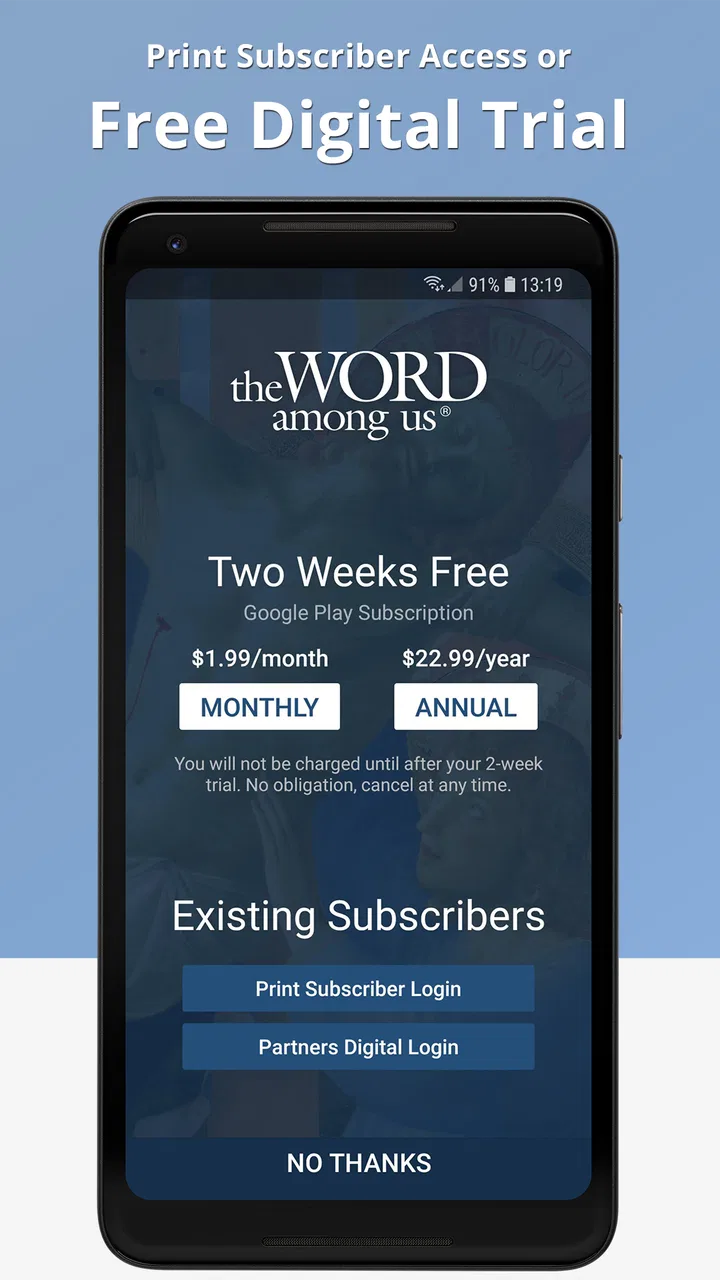
The app is free to install, which makes trying this routine low-risk. It carries optional in-app purchases ranging from $1.99 to $22.99 per item, so I would still check the purchase screen carefully before confirming anything. The free entry point is appealing, but users who want to avoid unexpected spending should pay attention to which material is included and which items may require a purchase.
Motor, sensory, and situational considerations
From a motor-access perspective, a devotional app benefits from asking less of the user than a typical content platform. The main task is reading, not dragging objects, rapidly tapping controls, or navigating a complicated workflow. That makes it more approachable for people who have difficulty with precise gestures or who prefer to use a phone with deliberate, slower movements.
Still, “simple” does not mean universally effortless. Reading on a phone requires repeated scrolling and sustained touch interaction, and that can be uncomfortable for someone with hand pain, tremors, or limited reach. In those situations, I would use the app in shorter sessions and place the phone on a stand rather than holding it throughout. A larger screen may also be more comfortable, although the experience will depend on the device and the user’s preferred settings.
People with low vision should think about the display as part of the overall experience. I would increase the device’s text size and contrast settings before deciding whether the app works well for me. Larger system text can improve comfort, but it may also change how much content fits on screen and increase scrolling. That is a reasonable trade-off for readability, especially when the goal is slow reading rather than quick scanning.
For users with dyslexia, attention difficulties, or cognitive fatigue, the focused subject matter may help because there are fewer unrelated topics pulling attention away. At the same time, religious texts and reflective writing can contain dense sentences and ideas that require more processing than a short news item. I would approach it in small sections, reread difficult passages, and avoid judging the experience by how quickly I finish.
Sensory context matters too. I would not expect the app to replace a quiet environment. A phone screen can introduce glare, notifications, and interruptions, all of which work against reflection. Using the app with notifications silenced and the screen brightness adjusted to the room makes a noticeable difference in practice. This is not a special feature of the app, but it is an important part of making the reading experience accessible in daily life.
Using it when time and attention are limited
The most realistic use case for me is a short morning session before work. I can open the day’s reading, sit with the meditation, and finish without committing to a long study period. Another reader might use it during a lunch break, while traveling, or before bed. The app suits these moments because its content is organized around the day rather than around an endless stream of updates.
That said, public spaces create their own barriers. On a crowded bus or in a noisy waiting room, reading a reflective meditation may be difficult even if the app itself is easy to operate. Outdoors, glare can make text harder to see. In a shared home, interruptions can break concentration. I would treat the app as portable, not automatically private or distraction-free.
It can also work for people who are returning to a Catholic reading routine after a long break. The daily format gives a clear starting point, so I do not have to decide which book or topic to open. That reduces the “where do I begin?” problem that often makes digital libraries feel intimidating. However, readers who need extensive background explanations, study notes, or a broad range of translations may prefer a dedicated Bible or study app alongside it.
Where it differs from ordinary news and magazine apps
Compared with general news applications, this one is intentionally much less expansive. A news app is better when I want multiple viewpoints, breaking stories, search across subjects, or frequent updates. The Word Among Us Mass Edition is better when I want a predictable devotional destination connected to the daily Mass readings.
It also differs from a standard Bible app. A Bible app usually gives me a large searchable collection and may support many reading plans or reference tools. This app’s advantage is the pairing of the day’s readings with a meditation, which gives the session a defined spiritual direction. The trade-off is that it is not designed to replace a comprehensive scripture study tool.
Printed devotional material remains a serious alternative. Paper avoids screen glare, battery concerns, and touch interaction, and some readers find it easier to annotate or revisit. The app wins on portability and convenience: I can keep the daily material with me without carrying another publication. For people who read best on paper or who want a screen-free prayer routine, the printed option may still be the better choice.
Remaining barriers and practical limitations
The biggest limitation is that the app’s usefulness depends on a particular kind of reader. It is aimed at Catholics who want daily Mass readings and meditations. If I am looking for secular magazines, church news, comparative theology, or a broad devotional library, I would be asking it to do something outside its natural role.
The reading experience may also feel too constrained for users who want extensive customization. A person who needs very specific typography, spacing, color, or navigation options should test the app on their own device rather than assume that a clean interface will meet every need. Device-level accessibility settings can help, but they do not guarantee that every screen will remain equally comfortable after text enlargement or display changes.
Another barrier is the difference between access and comprehension. Having the words on a phone does not automatically make the material easy to understand. Some readers may benefit from discussing the readings with a parish group, using a separate study resource, or listening to a person read aloud. I would see this app as one part of a spiritual routine, not as a complete solution for every learning style.
Purchases are another point to handle thoughtfully. The app is free, but optional items cost between $1.99 and $22.99. That structure may be perfectly acceptable for readers who want additional material, yet it means families should review purchase controls if several people share a device. I would also avoid assuming that every useful part of the experience is included at no cost until I have read the wording on the relevant screen.
Its technical footprint is broad enough for many older phones because it requires Android 5.0 or later. Even so, compatibility on paper does not tell me how comfortable the app will feel on a small, aging display. A device that technically runs it may still be a poor reading device if the screen is dim, the touch response is unreliable, or the user needs large text.
The app has been available since October 9, 2018, and its current version is 1.2.16.8. I mention that because readers using older devices often care less about novelty than about whether a familiar tool remains practical. The important test is not the version number by itself, but whether the app behaves reliably on the particular phone and operating system being used.
Who should choose it, and who should skip it
I would recommend it to a Catholic who wants a modest daily reading habit, prefers guided material over an enormous library, and values having the Mass readings and meditation in one place. It is especially suitable for someone who becomes distracted by general-purpose news feeds and wants an app with a narrower purpose.
I would be more cautious recommending it to a reader who needs audio-first access, advanced study tools, extensive personalization, or a fully screen-free experience. I would also point people toward a broader Bible or Catholic resource app if their main goal is searching scripture, comparing translations, or building a detailed long-term study plan.
The app’s audience is reflected in its reach: it has passed 100K+ installs, with a 4.2 average from around 438 ratings and 139 reviews. Those figures suggest that it has found a meaningful audience, but they should not replace personal testing. Accessibility is highly individual, and the same uncluttered layout that helps one reader may feel too limited to another.
An inclusive verdict on the daily reading experience
My overall impression is positive, with a clear qualification: its strongest accessibility quality is the focused, low-distraction structure, not a promise that every reader will find every interaction effortless. The app gives Catholic users a practical way to approach daily Mass readings and meditations, and its limited scope can make a routine easier to start and maintain.
I like it most when I use it intentionally: a comfortable display, a quiet moment, and enough time to read rather than skim. It works well for a person who wants a portable devotional and does not need a full study platform. The experience is less convincing for anyone who requires extensive controls, wants a wide range of content, or finds phone reading physically tiring.
The Everyone age rating also makes the app approachable as a family-oriented reading resource, though individual reading ability and spiritual maturity will still shape how useful the material feels. I would introduce it to a household by letting each person adjust the phone’s text and display settings and by keeping expectations realistic about what a devotional app can provide.
In the end, I see The Word Among Us Mass Edition as a focused tool rather than an all-purpose Catholic media center. Its value comes from removing the search and helping me arrive at the day’s readings quickly. If that is the routine I want, the free app is worth trying. If I need richer accessibility controls, deeper study functions, or a paper-like reading experience, I would choose another resource or use this one alongside it rather than relying on it alone.
FAQs for The Word Among Us Mass Edition
01What features does The Word Among Us Mass Edition offer?
The Word Among Us Mass Edition provides daily meditations based on the Mass readings, a complete order of the Mass, and inspirational essays and stories. This app is designed to enhance your spiritual journey with access to daily prayers and reflections, making it a comprehensive tool for personal devotion.
02Is The Word Among Us Mass Edition suitable for all levels of faith?
Yes, the app caters to both beginners and seasoned practitioners. It offers accessible language for newcomers while providing deep insights for those more familiar with Catholic teachings. Its user-friendly design ensures everyone can benefit from its rich content and daily spiritual guidance.
03Does the app require an internet connection to function?
The Word Among Us Mass Edition can be accessed offline once the content is downloaded. This feature is especially convenient for users who wish to read and reflect during travel or in places without internet access, ensuring uninterrupted spiritual growth and practice.
04Are there any subscription fees associated with the app?
Yes, while The Word Among Us offers some free content, a subscription is required to access its full range of features and daily meditations. Subscriptions are available on a monthly or annual basis, with the option to cancel at any time, providing flexibility for users.
05How can I customize my experience in The Word Among Us Mass Edition?
The app allows users to bookmark favorite reflections, set daily reminders for meditation, and adjust font sizes for easier reading. These customization options help tailor the app to fit personal preferences, making daily spiritual practice more engaging and accessible.
Pros
- User-friendly interface for easy navigation.
- Daily readings and reflections included.
- Offline access to content is available.
- Customizable notification settings.
- Compatible with both Android and iOS.
Cons
- Limited free content without subscription.
- Occasional crashes when updating content.
- In-app purchases can add up quickly.
- No audio options for readings.
- Requires regular internet for updates.

The Word Among Us Mass Edition
Gallery